
Think and Move Like Napoleon

What made Napoleon so fast?  Kriegsspiel shows us how.

This Pub Battles Variant simulates a more realistic command experience.


I had a great time running and playing CPXs and Kriegsspiels this year at Origins.  One thing that really stood out to me was how much like a video game it was.  With wargames, we usually have the luxury of slowing down and pondering carefully over tricky moves and situations.  Not so in Kriegsspiel.  It is much more true to life.  Slow periods of nothing interrupted by lightning strikes of panic and scrambling.

When a critical report comes in, the clock is ticking.  What should you do?  How should you respond?  Who needs new orders?  Where should you send them?  You have 2 min to answer all of these questions and write a new clear and concise order.  Can’t do it that quick?  Then you just missed your chance to respond first.  Can you have it together by the next 2 min turn before couriers go out again?  How many turns will it take you?

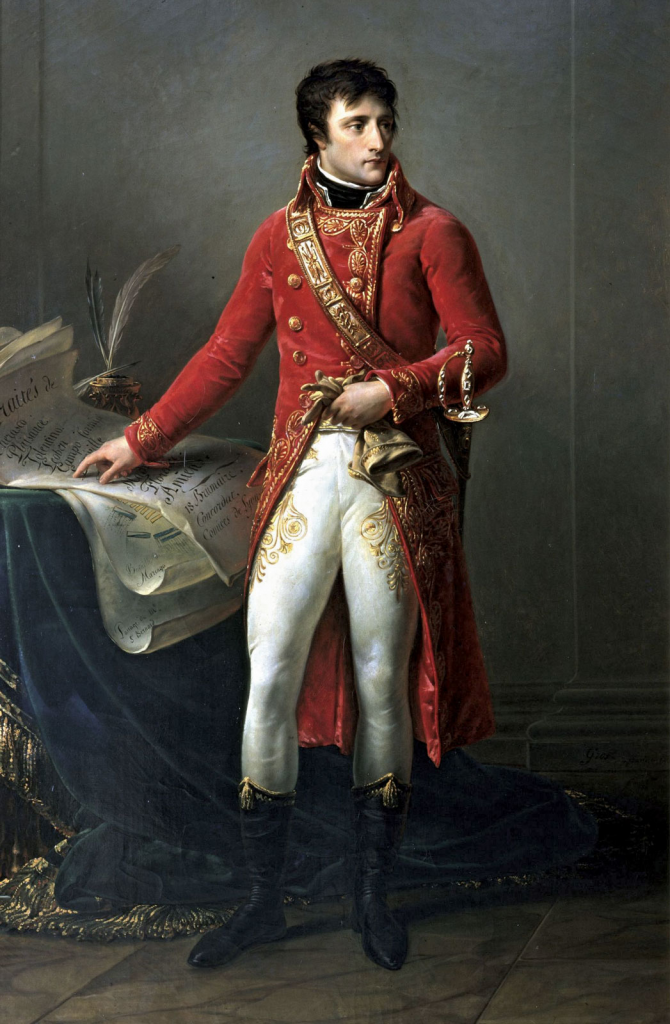
Napoleon was very quick.  He was often 1 step ahead of the enemy.  How did he pull this off?  Something interesting I learned about Napoleon, was that he often wrote orders in advance.  During the periods of nothing and ‘boredom’, he spent his time thinking ahead.  What are the key decision points coming up?  How will the enemy respond to your moves?  What are the possibilities?  Napoleon would then write out orders for several different enemy reactions in advance, already written to the commands they need to go to.  All he needed to do is pick a stack and hand to the couriers.  The thinking, decision and order writing was already done.  Boom, your troops are off and running almost instantly.
Our play test group has often discussed the Alter Rolls in Pub Battles.  This is the most crucial way to influence a battle.  Much better than the usual +1 mod to combat rolls.  This affects timing.  It is a shame that such a key element in the game is left to a simple die roll.  Make it or break it?  We’ve often discussed ways of expanding this beyond a die roll.  Instead of a leader rating, it would be much better if all the leaders were the same.  Your rating would instead be determined by your skill as a player but how?

After pondering the Kriegsspiel model, we have a new optional rule on this to try:


Rather than a die roll and only getting to roll once per turn for Alters, use the following rules:

Every HQ can attempt to Alter the sequence every chit pull IF that HQ has not moved yet in the turn.

There is no die roll.  There can only be 1 Alter per Chit Pull. (excepting ties) 

The first HQ that announces its Alter gets to do it.  All other fail.   

You must announce the Command and the type of Alter.  For example:

“First Corps, Delay”

“Eleventh Corps, Jump” 

You must say it clearly and discernable.  No mumbling.

Whatever you say, you must do.  You can’t blurt something random out and then decide what you really want to do later.

In a tie, BOTH HQs Alter.  Roll a die to determine which goes first.

You can Jump if your Chit was pulled.  This prevents another command from Jumping ahead of you, IF you say it first.  


Most of the play testers hate this rule.  It doesn’t work for solitaire games.  They prefer deep, thoughtful analysis to rapid, twitch style video games.  That’s fine.  That’s why this is an optional rule. 

However, consider this:  You have all the time in the world to thoughtfully analyze what you should do during the turn and before the Chit Pull.  Do you planning ahead of time, like Napoleon did.  When the time comes, be decisive and strike quickly. 

For those wargamers that want ‘more realism’, I’d argue this is it!  This puts you in the mindset of a commander.  It literally starts training your mind to think and behave like a commander.  Playing this way will teach you good leadership skills and habits.  

Even if you don’t like the idea, I’d urge you to find an opponent and at least give it a try.  Don’t knock it until you try it.  With a little practice, you may find it is easier than you think.  It also adds a lot of tension and fun!    

Waterloo Epic

Waterloo is now in play testing!  These are the first crude pix in it’s first, very rough draft state for testing.  Many changes to come before final release.

My son’s jaw dropped open when he walked in and saw this on the dinning room table.  He described it as ‘Epic’.  -and he doesn’t even like or play wargames.  As a junior in highschool, life is all about Rugby and girls right now.

First question is, how do these colors look?  Especially the Anglo – Dutch Army.  Is anything wrong?  Should some of the colors be different?  Please let us know if we have any glaring mistakes.


These are the pix of the adjoining engagement at Wavre:


Right now the biggest design question is:  Should we release these with maps at this size as two different battles?  I’d really like to see 2 huge maps of the region that fit perfectly together.  So you could fight both together.  Heck, you might not even fight at Waterloo.  As Napoleon, I’d really like to shift rapidly to the right and get in between the Brits and the Prussians.  Likely a foolish endeavor but I like to be able to try things like that.  If nothing else, then I discover why that is a really bad idea right?

The issue is that this approach will take much longer to work up graphics for.  Huge maps will also drive up the price.  I don’t know.  Maybe the Emperor is worth it.


Let us know what you think below!


Napoleon’s Kriegsspiel

What did Napoleon use?  Did he play Kriegsspiel?  What did he use in the field? 

Kreigsspiel wasn’t created until after Napoleon.  Like all games, it didn’t just materialize out of thin air.  It was an adaptation of things that came before.  Games are constantly evolving. 

Lots of people comment on how authentic our games look and feel.  It is very easy to imagine yourself a general on the field planning your strategy for battle while playing.  I love that effect but how true is it?  What did they actually use?

Kevin Zucker was commenting about the impact of Berthier being absent for Waterloo:

“Gone with Berthier was the wooden cabinet with many drawers full of wooden blocks representing all the regiments of both sides.”


I was instantly struck by this.  Sounds like my house now!  I’ve got bags of Kriegsspiel blocks all over the place.  I’ve been planning on getting a wooden storage box to organize them in.  Something along the lines of this:

 Looking ahead, I can quickly see the blocks over loading that.  I really love that cabinet above with all the pull out drawers.  That would be perfect for organizing all the different nations and periods of blocks.  I might have to build myself one some day….  

Look at how the top makes for a perfect gaming table to place maps!  It almost looks like it is hinged and folds open for double the size if needed.  Amazing!

Here are some details of what the drawers and blocks from the period would have looked like:


So, to answer the question, yes, it is authentic.  This is exactly the type of thing real generals would have used to plan campaigns and would even take them into the field to use during the battles.  

Kriegsspiel wasn’t created yet during Napoleon’s time but he did use blocks on maps for planning.  They measured rates of march with a compass or measuring stick.  You can see how this would soon develop into official rules for movement and combat resolution.  

Napoleon didn’t play Kriegsspiel.  He did use wooden blocks on real maps to plan and strategize.  The tools of the trade.  He played with the precursor of what was to soon become codified into Kriegssipiel.


What about the maps?  Why do we print our maps on canvas?

This may seem kind of strange to us today.  We use canvas for art.  Maps are printed on paper.  Back then, the good maps were printed on canvas.  It is much more durable and longer lasting.  Without modern rain gear, plastic and rubber seals, I suspect it was much more common for gear to get wet.  Paper maps could quickly get ruined in the field.  

You can actually see the canvas threads on the maps from the period.  They were often folded up.  Over time, the folds would wear through the map.  This is a historical map we researched for our new Monmouth battle:

Yep, definitely canvas.  So why use canvas maps?  Because it doesn’t get anymore realistic than that.  They are more durable.  I haven’t played a Pub Battle outside in the rain yet but I’ll have to do it just to get pictures and show it can be done.  -You might want to clear coat the stickers first to seal them onto the blocks!  

The canvas really looks beautiful too.  It makes the map look like a work of art.  It’s hard to describe until you hold one in your hands and see it on the table.   It is hard to imagine playing without it now.    


Supremacy Terrain

This is just a graphics test.  We’d like to get some feedback before we continue down this road. 

What do you guys think?  Too busy?  Too cluttered?  Look good?  Love, like, hate?


Let us know in comments below. 

We have rules for weather zones as well.  I’m afraid if we super impose weather over the top of this, it would really get confusing.  Any ideas?


By the way, we made some major breakthroughs finally on the Cyber Deck / Unconventional War expansion yesterday.  The rough draft rules should be finished today.  I expect this Expansion will be done and released soon!  

As it turns out, this was also the last piece we needed to make the 80’s Cold War edition work right.  I’m expecting this to be done and released soon as well.  Right now, we are seeing this as an expansion map and scenario.  We think the same deck and pieces will work, so you won’t have to buy a whole new game to get a whole new game.  That’s always nice.  =)


Wargames with No Victory Conditions

As a game designer, I often loathe victory conditions.  It is fun to research the battle and OB.  Set the map scale and scope to fit the battle.  Develop a system that models and explains the flow and events that took place.  Most of the time, this all comes together easily.  The trouble starts when you have to define who wins.

Kriegsspiel is like a breath of fresh air.  There usually aren’t any Victory Conditions at all.  Who won?  I don’t know.  Discuss it.  If there are any Victory Conditions, they are usually informal guidelines.  This is a sample from our Brandy Station Scenario:


Victory

Though Stuart was able to hold the field at Brandy Station, the Federals inflicted double the losses on the unprepared Confederates. The raid was a Federal success!

On the other hand, part of the Federal goal was to break through and locate Lee’s Army. Longstreet’s Corps was in Culpeper, only 3 miles to the west. On this account, Pleasonton failed but was much closer than he realized.

Consider the historical result to be a moderate Federal victory. Inflicting heavier losses on the Confederates and forcing them to withdrawal would be a Major Federal victory.

Can the Confederates keep the Federal forces contained to the eastern half of the map? Can they fight the Federal cavalry to a stand still without the aid of Rhode’s infantry Division? Can they preserve their force and suffer fewer casualties? These achievements should earn a Confederate victory.

What about a 2nd day? It may be tempting to see how this plays out but this is highly unlikely. Neither side was looking for a big battle. Pleasonton had planned for a 1 day raid and certainly wasn’t looking to take on a whole infantry Division.


To me, this makes much more sense.  I also find it more ‘realistic’ to true life.  Who won in a real battle?  They don’t earn VPs for hills or cities.  Do I just want to be lazy as a designer?  Probably.  If we made Victory Conditions like this for all of our games, my life would certainly be much easier.  

Would wargamers accept Victory Conditions like this?  What about no Victory Conditions at all?  Just play and then discuss it afterwards.  Imagine playing Germany in the last 6 months of WWII.  You lasted 1 month longer than Hitler did.  Great.  Does that mean you won?  You got conquered 2 months early.  Does that mean you lost?  Comparing your self to the historical benchmark is a guide but what does it really mean?  

I notice that in most of our non Kriegsspiel games we often debate and discuss who won at the end, regardless of what the official Victory Conditions are in the rules.  Many times, we don’t even look them up.  We ‘know’ who won.  In fact, often times we don’t finish wargames.  We play until we ‘know’ it is won.  Then we stop, discuss and move on to the next game.  

Many times we find ourselves at odds with the rules.  “Well, according to the rules, this side won but I really think the other side won because of….”  How many times have you heard that debated after a game?  Analyzing, discussing and debating victory after the game is one of the most enjoyable parts of wargaming to me.  

A question this leads to is:  Why do you play wargames?  Do you play to learn about history?  To learn about a specific battle or campaign?  To learn the tactics and strategies of the times?  To have fun spending time with a friend?  To role play and imagine yourself commanding a force in those times?  To compare and test your self against the historical leaders we read about?  To compete in a challenging game and beat someone?  To prove your superior knowledge and skill in the arts of war?

I guess I play for all these reasons to varying degrees.  Some gaming circles maybe more competitive than others.  Some more interested in the role playing aspects.  Some players find the idea of playing a game with no Victory Conditions absurd.  What is the point of playing?  Why even have a game then?

Good Victory Conditions do serve an important function.  Why do anything in a game?  Why attack that stronghold?  You are going to take massive casualties.  Well, you must.  That is the objective.  Good Victory Conditions give the player motivation.  What are you trying to do?  What are you trying to avoid?  Why should you do it?  Ideally, these should be in line with history.  If written correctly, victory conditions should encourage a player think and behave like their historical counterparts.

A noble pursuit.  It is extremely difficult to pull off.  I find Victory Conditions in almost all games to miss this mark.  They often seem empty, hollow and meaningless.  I guess that is why we still debate who ‘really’ won after the game, regardless of what the rules say.  


How do you feel about Victory Conditions?  Are they relevant and helpful?  What are bad conditions?  What are examples of games with really good Victory Conditions?  Would you play a game with no Victory Conditions at all?  What about Victory Guidelines like the ones above on Brandy Station?  Is this approach better than the traditional approach to wargaming?  

Comment below:


Pub Battles 2.0

We have an all new rules update available for Pub Battles now!  This is going to make things much easier going forward.  

The new format is made to fit in a regular 3 ring binder.  We like to slide the Terrain Effects chart into the back cover for easy reference.  This will keep our rules from being curled. 

It also makes it easy to keep all your Scenarios, rules and expansions all in 1 place.  

We have complete updates for Antietam and Marengo Scenarios.  The rest should be complete soon. 

You can get zip lock pouches for these that are perfect for storing your dice, measuring sticks and chains:


Fields of Fire

What has changed in the rules?  Very little.  Mostly just some minor tweaking, re-wording and clarification.  There is one ‘change’.  We don’t consider it a change because it is the way we’ve always played.  Strangely, as a system evolves, sometimes you have to ‘change’ the rules to keep the game the same.  This is one of those cases. 

We have introduced the concept of Fields of Fire.  The sets firm restrictions on how you can maneuver when you get close to the enemy.  The basic idea here is that if you are going to attack, then attack.  If you are going to fall back and avoid the enemy, then fall back.  You can’t do gamey things like disengage but only fall back 1 mm, or you move up to attack the enemy but you don’t attack.  You stay back 1 mm.  

In real life terms, that IS combat.  You are still in close range of heavy musket fire.  We didn’t want to bog the system down with complex rules on assault vs ranged fire attacks.  This simple restriction forces you to maneuver like an Umpire would require you to.  No more trickery.  Fight like gentlemen.  🙂

Some of you will immediately think of the different musket ranges.  Yes, there is a difference between smooth bore and rifled.  At this scale, we are only talking the difference between 1/2″ and 1″.   We are still in the same 1/3 move range if you round.  You may want to mark the exact ranges on your sticks and chains if you want to use the real distance.  

However, while testing new Ancient battles between Rome and Carthage, we noted that this rule still mostly holds true even without any muskets at all.  A better term might be:  Proximity to the Enemy.  When the enemy is that close, everybody is kind of on edge.  Either side could rush at any moment.  There isn’t much time to react at that range.  It is very….   uncomfortable.  

In all ages, troops didn’t tend to get real close to each other and then just sit there all day.  You either attack and fight or you pull back and plan.   


How do I Get the New Rules?

If you already have Pub Battles, you can get the new updates for FREE!

Just send us an email.  (we won’t put you on a spam list)  We will send you a pdf of the Rules, Terrain Effects and Scenarios we have now.  You just need to print them out double sided and get a 3 ring binder.  We think black looks best with the clear view pockets.

Pub Battles -mini review

Pub Battles.  What is it like?  Is it really good?  Worth the price?  Blah, blah, blah.  I could talk all day about the system.  “Yeah, of course YOU say it’s great.  You’re supposed to say that.  What do other people say?”  It always carries more weight if somebody else says you’re great.    

We get feedback emails like this all the time from people.  I thought it would help to post some online.  This isn’t meant as a formal review.  It is hardly even a mini review.  The important thing is that it is not from us.  I think it does a good job of capturing some key concepts in the game.   


There is a fine line between simple enough, and too simple. As far as wargames go, Pub Battles is so simple that many feel the rules are incomplete. And yet to new players it is still intimidating.  

Pub Battles is perfect for me. It gives the feel of commanding an army without all the minutia that is actually required to run an army. 

I like how it mirrors the look of maps of the battles that we see in history books. The long rectangular blocks. It is as if you just blew up the map from a book and placed your blocks on the starting positions. I had always dreamed of doing that, and then Pub Battles! 

I’m also of the opinion that the more detailed the rules, the farther away one gets from an actual simulation. 

It’s like this; you have a mental image of a battle that the game is attempting to simulate. All of the rules are essentially an awkward interface with your mental image. Elegant rules are rules that seem intuitive, the kind you don’t have to keep looking up. Every time you have to stop and check the rules you’re breaking the spell. It’s like the film breaking during a movie. 

Many of my rules misinterpretation with Pub Battles come from never looking at the rules. For months I played Antietam almost daily, yet I never looked at the rules after day one.

I was doing a couple of things wrong, but it didn’t matter. It worked for me and I had fun. None of the grognards that I played it with ever thought anything was wrong either. They played the rules as I explained them and felt they were good rules. 

The biggest adjustment was the non-linear movement. When they would question a block moving out of contact I would just explain that it is simultaneous movement and the enemy wasn’t there when they arrived. If you move second you’ve hoodwinked your opponent. They liked this. 


Mike Strand 

Dracula Battle Decisions

Resolving Battles in Dracula is tense and involves a number of interesting decisions.  Deploying your forces to fight can have a big impact on how the battle develops.  Yes, there is luck involved but you can manage much of that with how you develop your forces on the battle field.  Let’s look at an example.

Dracula has attacked into Pitesti.  Dracula has 8 Troops.  The Muslims only have 5.  Dracula can group his army by 4’s.  The Muslims can only group by 2s.   


Before the opposing armies can actually fight, first they must find each other by Searching.  Each Group rolls 1 die.  They must roll their leaders rating or lower:  Dracula 4, Muslims 2


Dracula rolls:  2, 4.  Both Groups made it to the battle!

Muslims roll:  2, 3, 5.  Wouldn’t you know it?  Only the smallest Group succeeds.  The other two are lost this round and can’t fire unless fired upon. 


The Dracula player now has some interesting choices to make.  He has to declare which Groups he is firing at.  Dracula can mix up his troops however he wants.  They don’t have to stay in 2 Groups of 4.  Dracula could just fire all 8 at the 1 active defender.  The problem with this is that any excess hits are wasted.  They only apply to the Group he declared.  Out of 8 rolls, he should get 4 hits on average.  So with average luck, Dracula will kill the 1 defender and then waste 3 good hits. 


A better deployment for Dracula would be something like this:


3 Troops fire at the 1 Muslim.  This should be enough to kill him.  The remaining 5 Troops attack one of the lost Muslim Groups. 

Let’s say those first 3 Troops score 3 hits on the 1 Muslim defender.  The first 1 kills the Muslim piece, the other 2 are wasted.  You can’t apply them to other defenders.   

Next, let’s say the Group of 5 score 4 hits.  The first 2 hits kill the defenders, the other 2 are wasted.

This arrangement was better but still liable to generate wasted hits.  Ok, then the best thing to do is ensure that no hits are wasted?  Not necessarily.  If you push too hard, you could get yourself into trouble.  Check out this is a risky attack:


Here we have 2 Troops attacking the 1 Muslim Group.  On average, they ‘should’ kill the defender.  No guarantees.  Next we have 2 Groups of 3 attacking both lost Muslim Groups.  If Dracula gets a little lucky, this could be devastating.  The Muslims could be virtually wiped out in 1 round of combat with no chance to return fire.


It could also go very badly for Dracula.  Let’s say the 2 vs 1 both score 1 hit.  The middle Dracula group misses.  The third only scores 1 hit.  Then the ‘lost’ Muslims return fire with 3 hits.  Then Dracula would be going into a second round of combat for the battle looking like this:


Now it’s pretty much an even up fight.  This is a total disaster for Dracula.  Starting the game outnumbered 6:1, Dracula can’t afford to fight even up battles like this. 


Just to clarify, what if ALL groups on both sides passed their search rolls and were active to fight on round 1?  

That is just a straight up fight.  There are no decisions to make.  Dracula would roll 8 dice, the Muslims roll 5, you count hits and remove losses.  

The decisions on declaring attacks come up when the enemy has Groups that are lost:  failed their search roll and are Inactive.   

Real War vs Wargames

What is the difference between wargames and what really happens in war?  While working on our new Battle of the Bulge design, I can’t help but notice the impact of unit boundary lines.


Well it’s another cold snowy Sunday.  Too miserable to go out.  The perfect day to work on our Battle of the Bulge design.  Lol…  Is that a common wargamer thing or am I just a nut?  Do you guys do that too?  Play games like Battle of Moscow, Bulge and Austerlitz in the winter?  Then Vietnam, Pacific, North Africa in the heat of summer?  We need to make a Normandy Pub Battle that you can play at the beach!


I digress.  So we are working on our new Bulge game.  For a starting map, we just printed off a real military map of the battle.  We’ve come up with an OB and made a set of Kriegsspiel blocks set to scale for Divisions. 


In the opening turns, 5th Panzer Army in the center, did well and broken open the front easily.  6th Panzer to the north got stalled and bogged down. 


As a wargamer, I figured no problem.  Next turn, I’ll just reinforce success.  I’ll peel all the armor off of 6th Panzer and shift them south.  Leave the infantry there to keep slugging away.  I don’t want to hold up progress.  It is critical to drive as deep and fast as possible in the opening of the operation. 


That is all true but there is a huge problem with this in the real world:  the unit boundary line.  You can’t just randomly send units willy-nilly all over the map on a whim.  All of those free SS Panzer Divisions can’t move there.  That is out of there area of deployment and chain of command.  They are in the 6th Panzer Army.  All the openings are in 5th Panzer’s area of operation. 


But 5th Panzer doesn’t have enough free units to exploit this opening.  I know!!  The technical military term for this is:  SNAFU,  Situation Normal, All F*#%ed Up. 


I suppose you could make a shift like this but it would take time.  Meetings, order changes, reassignments, etc.  By the time you go through all of that, it’s too late.  The open door has been shut. 


Here is another issue.  Look at the German 7th Army down here in the south:


5th Panzer in the center has broken out.  They are spread pretty thin and dangerously stretched out.  7th Army is all bottled up.  All those units sitting there with nothing to do.  Why?  Unit boundary line.  In fact, look at the unit boundary line drawn for 7th Army.  It is the long skinny one drawn at the bottom of the map:


By the way, that is Patton’s 2 Corps sitting off the edge of the map waiting to come in as reinforcements later.


How is 7th Army even supposed to do that?  They are supposed to drive long and deep.  Fine along what MSR (main supply route)?  Look at the terrain.  Up and down hills, over rivers, through woods, no we’re not going to grandma’s house.  Not a single road to advance along.  Luckily most of the Army is infantry.  They only have 1 armored division and 1 mech division for support. 


Also, look to the south of 7th Army.  Clear open sailing!  Instead of trying to slog along west, I really wanted to break out south into Luxembourg.  Guess what?  Can’t.  It’s beyond the objective boundary.  Sigh. 


Who in the world drew this boundary line anyways?  Imagine being the 7th Army commander here.  I’d be pretty miffed.  I would have protested this mission up the chain of command right from the get go.  How could 7th Army ever get anywhere with this objective?  Of course, protesting the feasibility of orders up the chain, through the German High Command at this time wasn’t very productive. 


All of this raises a number of questions:


1)      How important is drawing unit boundary lines in orders?  Is this seemingly arbitrary task much more critical to the mission success than we realize? 

2)      Strictly following the historical boundaries at the opening of the Battle of the Bulge seems to have a huge impact.  Did these boundary lines doom the operation right from the get go?  (in addition to all the other problems working against the Wehrmacht.)   Could simply redrawing these lines and adjusting the opening OB create much better German results?

3)      What is your experience in real world, military operations with this?  Have you seen boundary line issues cause a mission to fail?  How much planning, effort and thought is actually put into drawing them?  How could this be better?

4)      From a game design perspective, should wargames enforce proper phase line and unit boundary limits?  Would that make them more accurate and better models?  Would that ruin them as games and make them less fun?  Would they be more fun?

5)      From a military science perspective, what can we learn from wargames?  How could this be used in real world command to improve unit performance?  Are Phase Lines and Unit Boundaries bad?  How could you command and conduct operations without them?  What type of command system would it take to allow real world units to freely shift as needed along the front without time delay and confusion?


What are your thoughts?  Comment below:


Supremacy Alliances

Sure, I’ll be your Ally….    Why not?  What is there to lose?  What is there to gain?  I can still attack you anytime I want.  Players always talk about being Allies but it doesn’t really mean anything.


This is a problem that plagues most multiplayer games.  Players can say anything.  What will they do?  If they can betray you and attack you at anytime, what good is an Alliance?   

What if it did mean something?  What if they really couldn’t attack you?  It was in the rules!  What if you also really got something out of it?  You could combine forces and coordinate together for attacks.  That would make an Alliance truly powerful.  

We have developed some new optional rules that you can add to Supremacy.  They do exactly that.  They put real meat into an Alliance.  They can’t just betray you.  It is against the rules.  Are they still willing declare an Alliance?  This completely changes the game. 

Where can you get these new Optional Rules?  They are now included in our Diplomatic Kit.   


IF

You were a Supremacy Backer

OR

Previously purchased the Diplomatic Kit,

Send us an email and we will send you a copy of these new Optional Alliance Rules for FREE!!