Mega Supremacy Event

Our first ever Mega Event and it is completely FREE!!    We are so excited. 

Supremacy is perfectly suited to be run as a Mega Game. In many ways, I think the system works better as a Mega Game. 

What is a Mega Game?  It is a large, multi-player event.  They often have 30-80 players in 1 game!  The countries are played by teams.  So you break the duties down by role:  President, Diplomat, General, Trader. 

I’ve always wanted to do this with Supremacy. The problem is always, where do you get enough players?  The Mega Game format solves this! 

More Players = More Fun

This is a Large Convention, Supremacy, Kriegsspiel and Roleplaying game all rolled into some big, crazy, wonderful mix.

Make it if you can. I know many of you are not in the area.  We will report on the results here on our site.  We hope to start doing regular events like this here in the Front Range area.  As this expands, we may be coming to your area!

If you would like to see a Mega Supremacy near you, email us your location.


How Does Mega Supremacy Work?


When and Where is this?


Speed Supremacy

The economics: trade, loans, bonds, resource cards, market etc are fascinating.  This is one of the most remarkable things about Supremacy.  They make an incredible model of world trade.  All of these things however add a lot of time to play.  Sometimes, we just want to fight!

These rules dramatically speed up the game. All the economics are cut out and streamlined.  It’s all boiled down to just attack and build. 

With everything stripped out, the Victory becomes much more clear. It is all about growth.  If you sit and build, your score is ZERO.  You must attack. 


Setup

Each player should start with their regular forces but no money.

Produce

Ignore all Salaries for your companies.   Everything is now free!

Blockades and Seizures work the same.

Income

Instead of producing resources, just collect $100 BL in cash for each resource you have in cards.  


For Example, if this is your total cards:         3 Min    5 Grn    3 Oil

Your Income would be:  $300 + $500 + $300 = $1,100 BL


Trade

There is no Trading, Loans or Bonds. 

Instead of Grain, spend $100 BL in cash to Feed every 10 armies / naives.    

Combat

Instead of paying resources to move and attack, pay $200 BL cash for the regular 3 moves / fires.  The Defender must pay $100 BL for a committed defense.   

Redeploy

Instead of paying resources to move, pay $100 BL cash.


Build

Building now only requires cash, no resources:

Army / Navy     $100 BL

ICBM                $500 BL

ABM                 $1,000 BL

You must still research to get new Company cards and build ICBMs & ABMs. The cost is the same:  $200 BL per card you turn over.

Ending the Game

Record your starting production at the beginning of the game.

Your total score is:

Total Ending Production – Starting Production

All New Fortuna 2020

We’ve been working on this expansion for quite some time now. We could have rushed it out the door long ago but it just didn’t feel right.  I might be too much of a perfectionist sometimes.  In this case, I’m glad I held out.  What resulted is really spectacular and well worth the wait. 

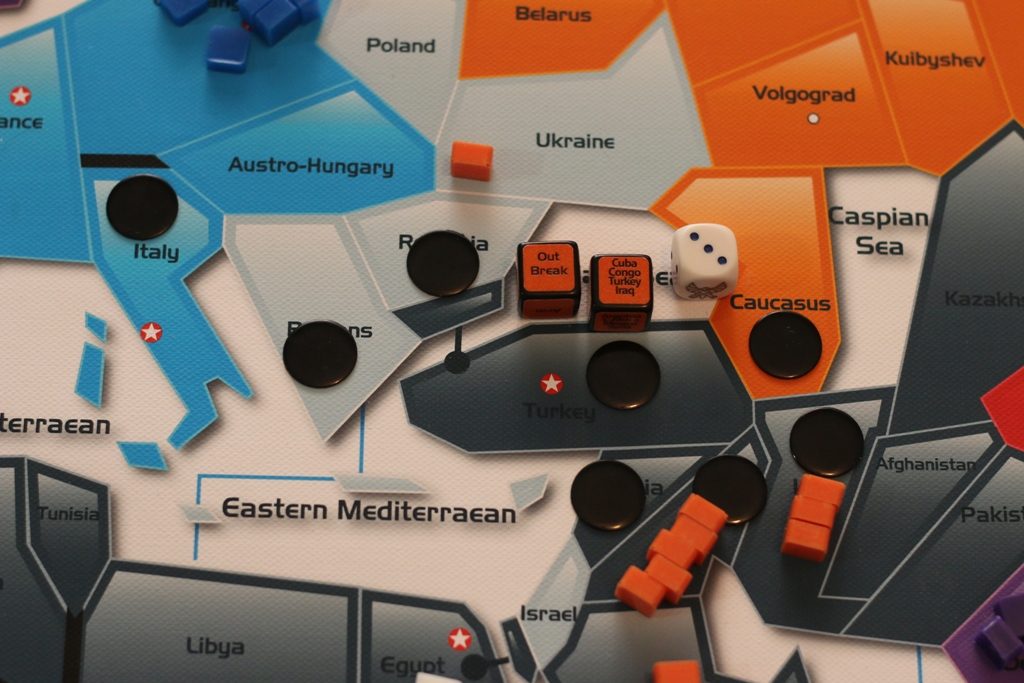
We really liked the ‘idea’ of the old Fortuna Deck: Add random events into the world.  True.  Often times random events can trigger world conflict.  I also think people were looking to the Fortuna deck to ‘fix’ the broken market.  Moving the market around at random loosened things up and gave players more chances to buy and sell.  In the old design, it did help. 

IMG_8862

Well, the market is fixed now. It doesn’t need random moves.  What else did the deck do?  Apart from random market moves, it added natural disasters.  This sounded like fun to us at first.  In practice it gets old real quick.  How many massive typhoons, earthquakes, etc.  can hit per turn?  Seriously. 

Finally, we had a burst of inspiration: Why not use the Fortuna deck to control the Minor countries?  They just sit there and do nothing but get invaded.  In the real world, the actions of Minor countries can often prompt the Superpowers to act.  They trigger all kinds of world conflict, even war. 

IMG_8868

So the new ‘deck’ controls the actions of Minors. Tin pot dictators pop up in Minor countries with varying degrees of annoyance.  They might just build up their army.  They might decide to seize all factories under their control.  They can actually invade their peaceful neighbors and seize those factories.  They can acquire ICBMs from the black market.  There can even be outbreaks of deadly pandemic viruses.  Perfect. 

IMG_8876

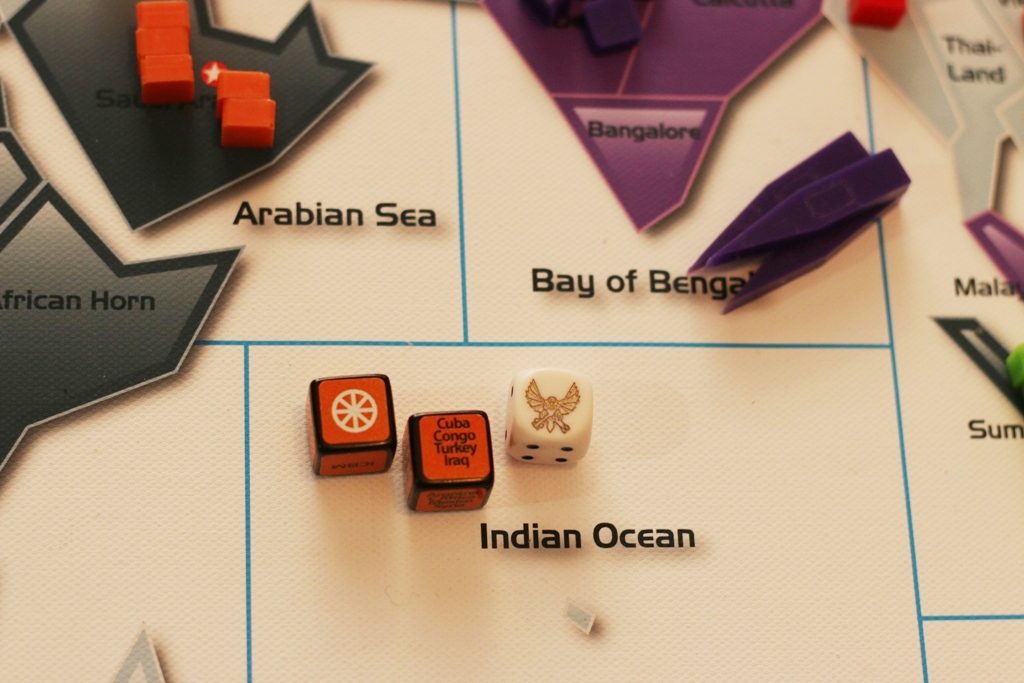
We had one last improvement: we converted the ‘deck’ into dice!  So it’s not a deck at all really.  They are Fortuna Dice

IMG_8878

We were inspired by a bit of old technology:  Kriegsspiel Dice.  It is amazing how much critical info can be packed onto a few tiny cubes.  No charts.  No tables. No rules.  Nothing to look up.  They are smaller, lighter and faster to use than a deck of cards.  A quick toss and bam, there’s the result. 

Sometimes the Old and Unimproved ways are simply much better.    


Battle at Marengo

IMG_7279

Final demise of the Autrians


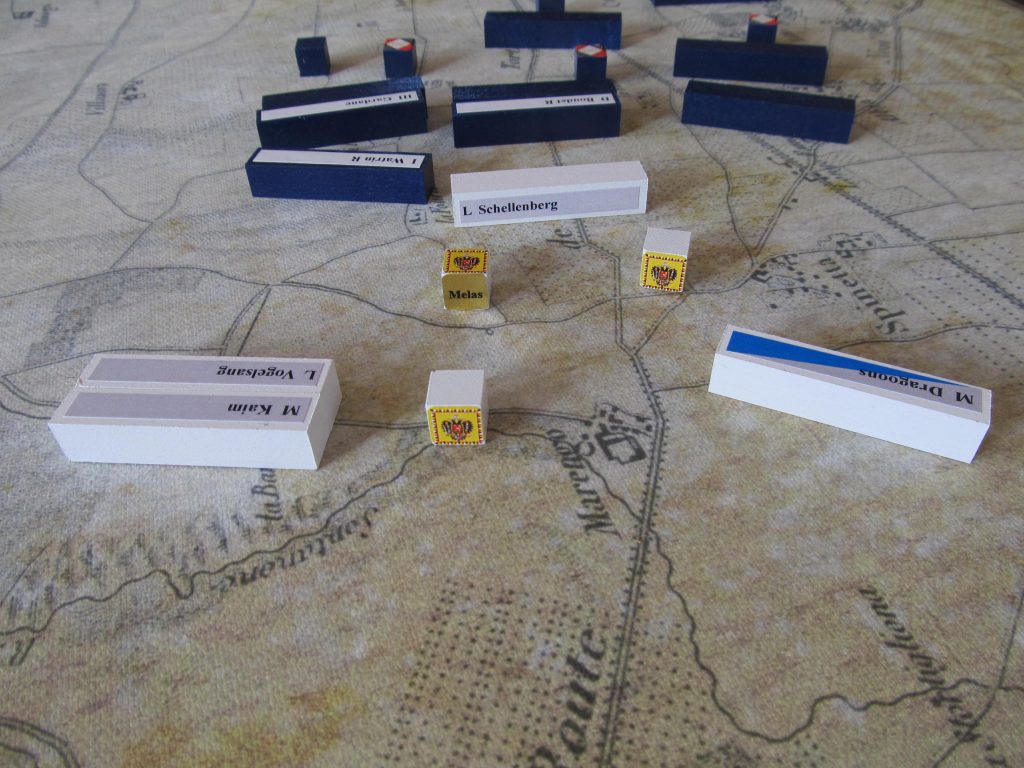
I played a game a Marengo last night.  It is really much better to jump around and play different battles.  It makes it feel fresh.  More like you are there for the first time.  –because I haven’t seen it for awhile I forget all the nuances of that field. 

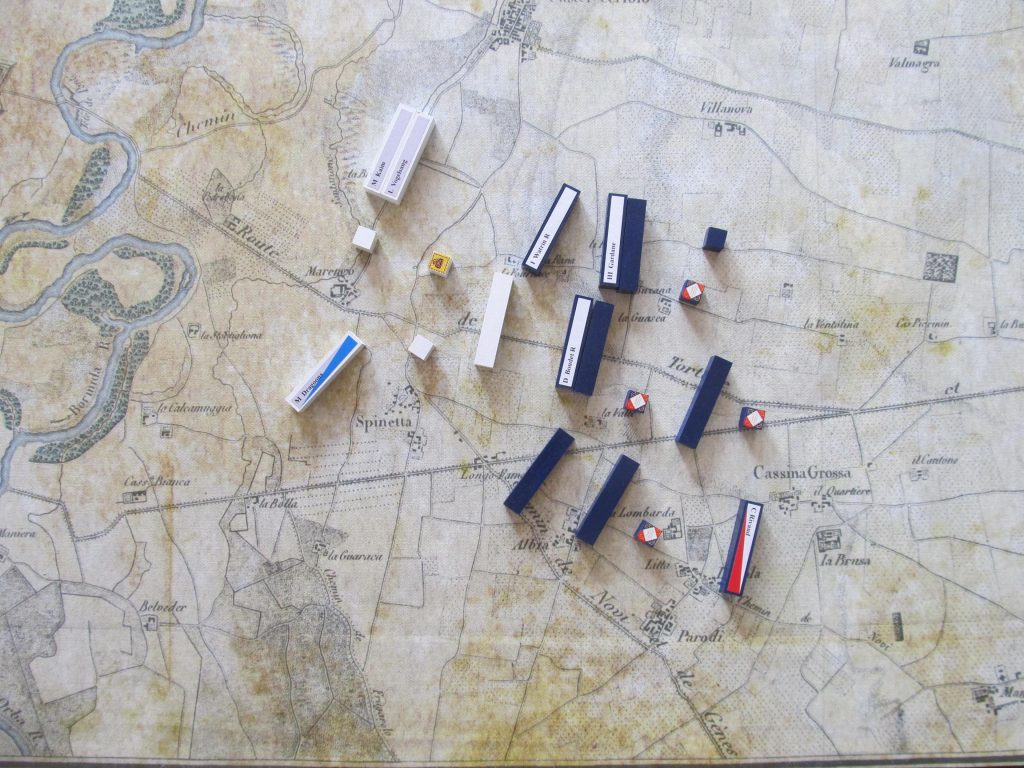
This is a really fun and unique fight.  The French actually outnumber the Austrians in points but the Austrians attack because they have more pieces.  The French keep getting flanked and forced back, -Until Desaix shows up! 

That gives them the extra couple of blocks they need to solidify their lines and punch back.  Very cool. 

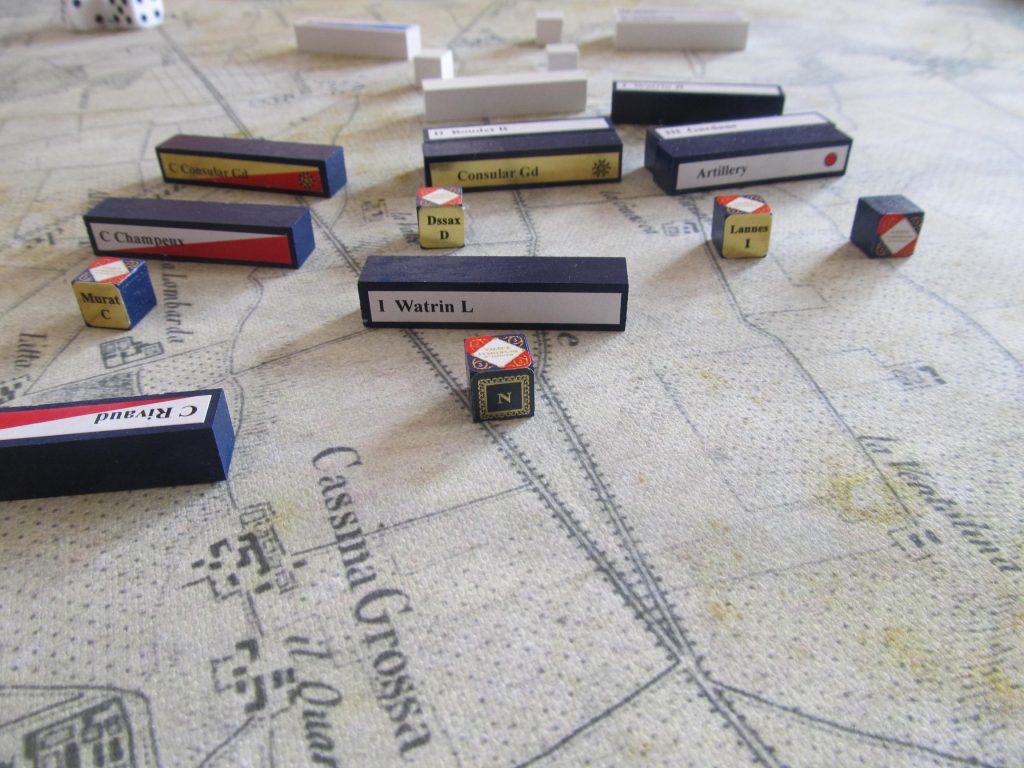
I used the Murat to screen the flanks.  Later he ran down the Austrian skirmishers.  I didn’t get a chance to actually charge spent infantry.    

I didn’t make a Column attack either but I did think that it would be a good way to attack up hill.  You are going to be suffering a -1 anyways.  If you can survive until the 2nd round that could make up for the hill advantage! 

IMG_7281

Final positions of both armies, at least before Murat was unleashed to run down the remaining Austrians.


I’m really liking this system as I see it in more battles.  The chit movement system really shines here.  In a big open field with little terrain, the battle becomes very fluid.  It mostly comes down to maneuver.  The elegance and intricacies of the chit pull movement system really stand out then.  There are many subtle and tricky things we often lose sight of in the other battles. 

I can just imagine how this mirrors real command.  I wanted to attack with Desaix but Lannes came up to move first.  I rolled to jump Desaix first but failed.  I rolled again with Bonaparte but he failed too.  Alright, so I have ordered both Corps to attack but can’t coordinate them like I want.  Lannes jumps the gun, moves first and then blocks the route of advance by Desaix.  Sigh.  That is command. 

IMG_7278

Now what does Desaix do?  Sit out a turn and do nothing?  Or attack somewhere else in less than optimal conditions?  That is the type of thing that comes up all the time.  That is war. 

I think the technical military term for it is Charlie Foxtrot.   


IMG_7280

Final Score: French Major Victory


Bunker Hill

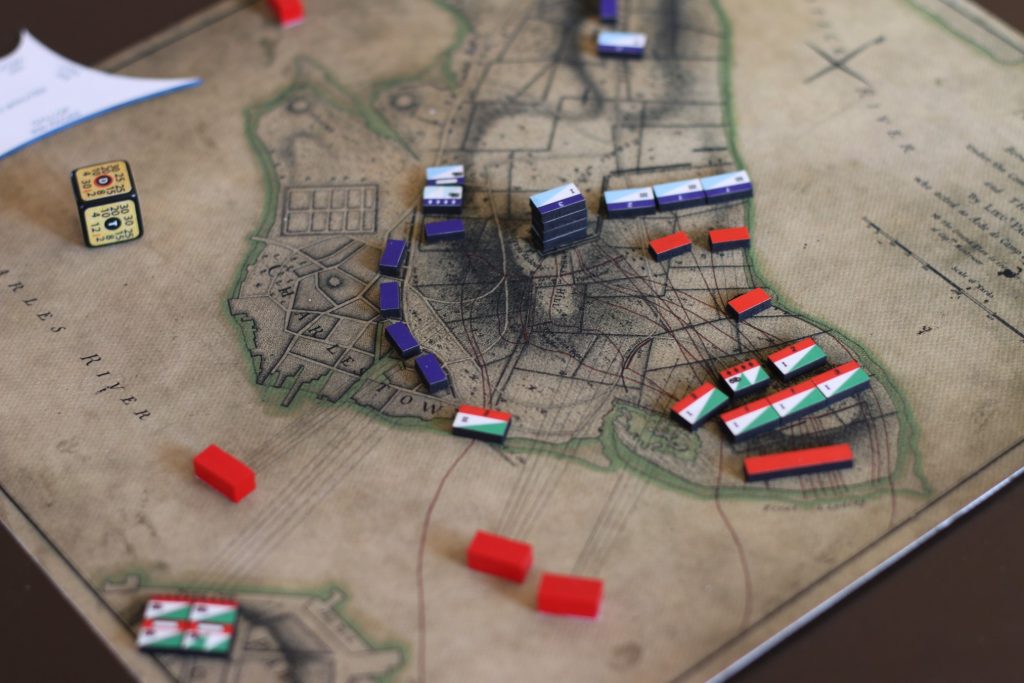
Over Christmas break, we setup a little battle for Kriegsspiel. Something small and quick.  How about Bunker Hill?

We did a little research, found some maps and set it up:

IMG_8744


IMG_8742


IMG_8745


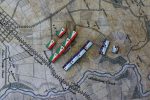
The wooden blocks are ships at sea bombarding the peninsula.

In Kriegsspiel, we use real maps. This got me thinking about Pub Battles.  Could we make a Pub Battles:  Bunker Hill?  I think so.  We’d need to adjust the scale a bit.  Some were worried that is would be boring after the first play or so.  There isn’t much to do but attack the redoubt. 

True, unless the British can land anywhere and start attacking….   They took terrible losses at the battle.  Could that have been avoided?  Could they have defeated the rebels with light losses?  A big, British victory here might have prevented the entire war.

I think it could be a good game. What about you?

Kreigsspiel Time Scale

Each turn in Kriegsspiel represents 2 min. Often times, Kriegsspiel is run in real time.  You play a full days battle in 1 full day.  You just got a report in from the Umpire.  You need to write new orders to respond.  How long does that take you?  Well, the clock is ticking.  How fast can you write?  This creates a sense of urgency and timing. 

In a big battle, you might need a team of Umpires to crank out the combat results and issue reports. One option an Umpire has, is to group turns together to speed things up.  This is particularly helpful for operational movement.  So let’s say the forces aren’t even in contact yet.  You start playing by 1 hour turns or even 1 day turns.  Once there is contact, then you slow it down to 2 min turns. 

Keep in mind, the turns are for the Umpire. The players don’t usually know about or track turns.  They just know what time it is. 

So how does the time / movement scale compare to Pub Battles?

img_8722

This is a 2 min step out march rate compared to the Pub Battles Movement Stick. Keep in mind that the map scales are off by 2:1.  So really, that is how far infantry would move in 4 min of time in Kriegsspiel. 

How long are Pub Battles turns? 1.5 hours.  Wow!!  This is way off.  By direct comparison it is.  Keep in mind how Kriegsspiel is played.  That is technically how fast your infantry CAN move in 4 min.  That doesn’t mean every piece you have moves that far every 4 min.  They don’t move at all if they don’t have orders! 

So first, you have to write an order. How long does that take you?  15 min?  Remember, the clock is ticking.  Now you have to get this order to the Umpire.  He has to assign it to a messenger and track the messengers move down the chain of command down to the actual unit.  How long does that take?  How many people are in the chain of command?  Each link adds time.  It could easily take 20-30 min for a messenger to ride that far.  Let’s say there are 3 key command links that needs to give the orders a once over.  Figure a 10 min delay for each of them while they make plans and the troops are ready to actually start moving. 

That all adds up to about an hour, give or take. It depends on the exact situation.  That leaves about 20-30 min left for the troops to actually march.  That works out to be just about right:  1.5 hours.  An Umpire would track all of these details in Kriegsspiel.  Pub Battles streamlines this for speed.  It is a close approximation.  You do lose some of this detail and texture in command systems.  Pub Battles makes up for some of this with the Turn Alter rolls HQs can do.  Some HQs are rated higher to simulate a more efficient and sleeker command system. 

The Mounted speed is comparable.

img_8721

Note that this shows the ‘gallop’ speed of cavalry. You can do this but only for short bursts.  Infantry has a variable march speed as well. 


What about artillery ranges?

img_8720

Very comparable. Again, remember the 2:1 map ratio.  Kriegsspiel breaks ranges down into more detail with the various gun weights.  Pub Battles again simplifies and groups these all together.  A close approximation as a trade off for speed. 

Is that a good trade? How much accuracy and detail are we losing here?  Judging from this, it looks to be about a 5% loss in accuracy.  How much speed do we gain?  Well, if you are playing in real time, a full day battle should take about a full day in the real world.  Let’s call it 8 hours.  How long does it take to play a full battle in Pub Battles?  1 hour.  Would that be an 800% improvement? 

I’d call that a bargain.             

Kriegsspiel Battle Scale

I just got my new Kriegsspiel pieces in the mail. My own Christmas present to myself!  Is that what most wargamers do? 

They look great. I’m very excited.  I got the measuring ‘apparatus’ too.  I immediately set them up on the maps.  Next, I had to put them on the Pub Battles maps.  They looked great there too.  I couldn’t help but wonder how they compared to Pub Battles. 

img_8707


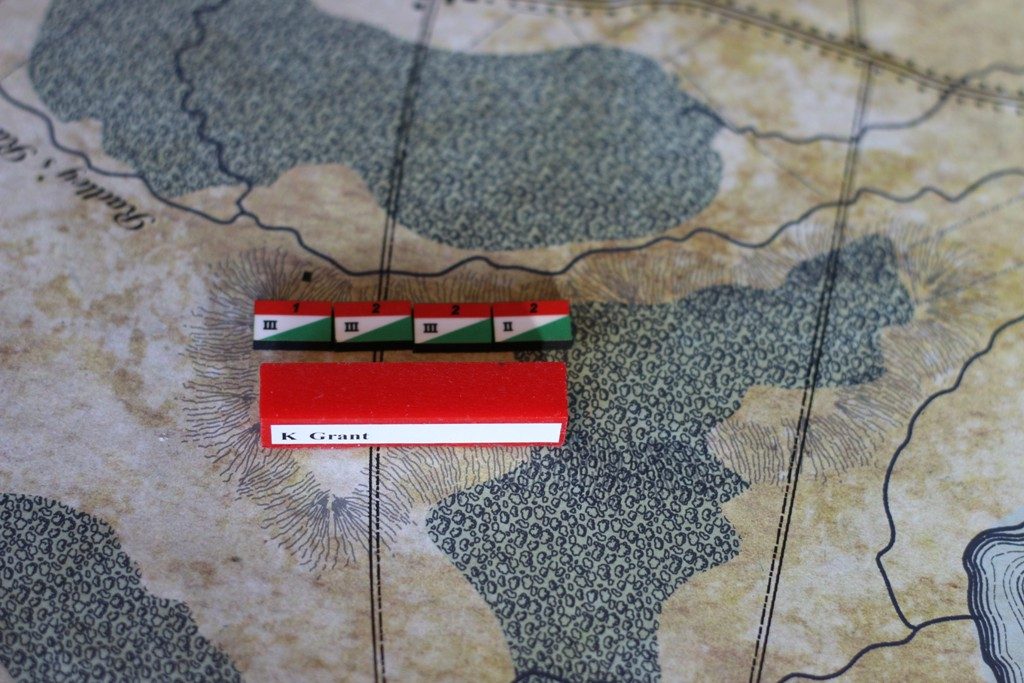
This is two Kriegsspiel Battalions in line formation, all spread out, end to end. Each small Kriegsspiel block is a ‘Half Battalion’ that represents 450 men.  They almost equal the length of a Pub Battles Brigade at Brandywine.

Amazing how close these line up together but the scale is completely off. Two Battalions is what?  One small Regiment?  Nowhere near a Brigade.  True but lets compare the actual numbers.

If each Kriegsspiel piece is 450 men, then these four blocks represent 1,800.  How many men are in a Brigade at Brandywine?  About 2,000.  So actually, they match almost perfectly. 

img_8710 


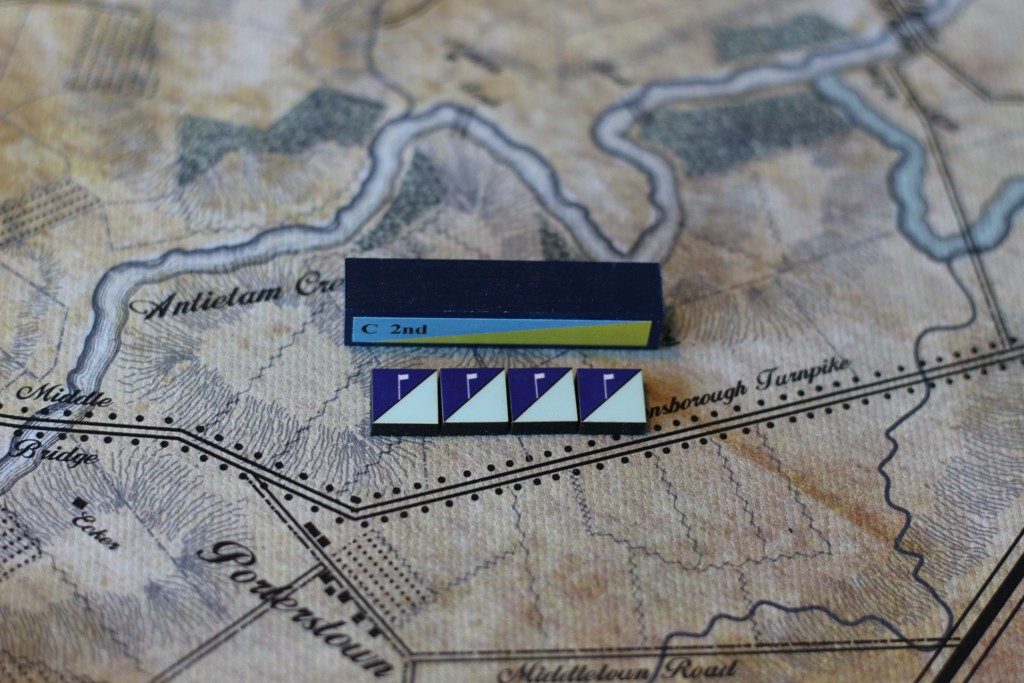
Here is a Union Cavalry Brigade at Sharpsburg with it’s Kriegsspiel equivalent. 


The map scale is the same at Sharpsburg and Brandywine. The pieces are exactly the same size but they represent bigger formations.  At Brandywine, a piece represents a 2,000 man Brigade.  At Sharpsburg, each piece is a Division.  Divisions are typically made up of 2-3 Brigades.  These Brigades are about the same size:  1,500-2,000 men. 

Here Sykes’ Division prepares to attack DH Hill in the Sunken Road in Pub Battles:

img_8713


img_8716


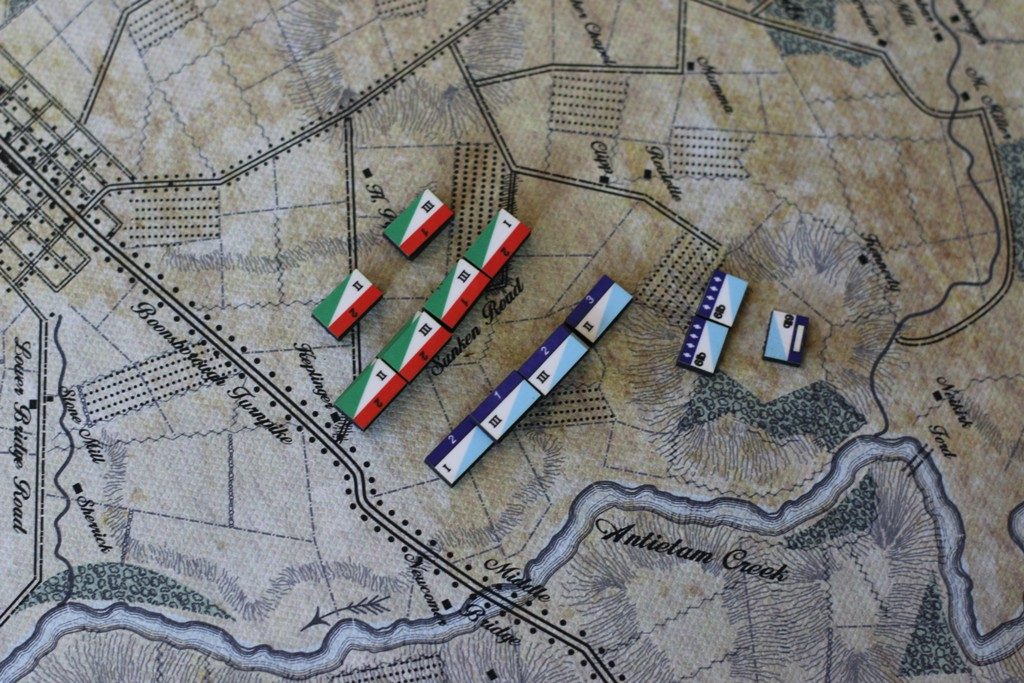
Ok, now how would this look if we set it up in Kriegsspiel blocks?  Like this:
img_8711


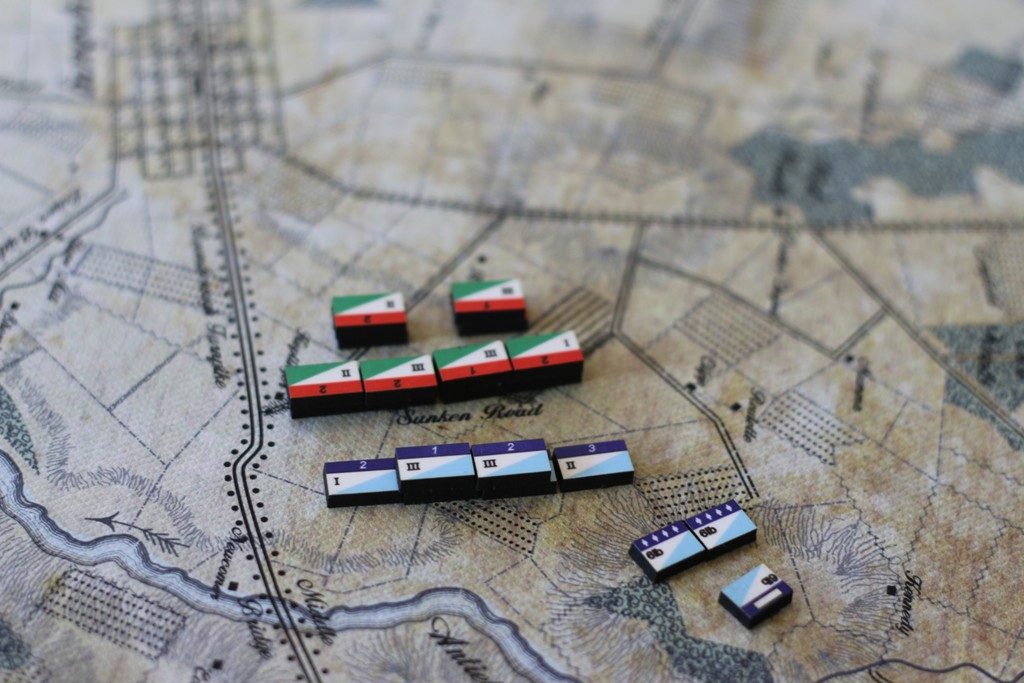
What?!  How can that be the same?  If the map scales are the same, how could a whole Division fit in the same space as a Brigade?  Because in Kriegsspiel, the blocks stack.  Here are the same pieces shown at an angle:
img_8712


This was a different war.  Greater numbers were involved.  The concentration of troops was higher.  There you go.  The Kriegsspiel pieces can stack up to 4 high.  They are extremely versatile.


I think terminology here is causing the confusion.  Basically, what Kriegsspiel calls a Battalion is really a Regiment in the Civil War of 1,000 men.  Two Regiments lined up end to end is a Brigade.  Stack another 1-2 Regiments on top and you have a Division. 


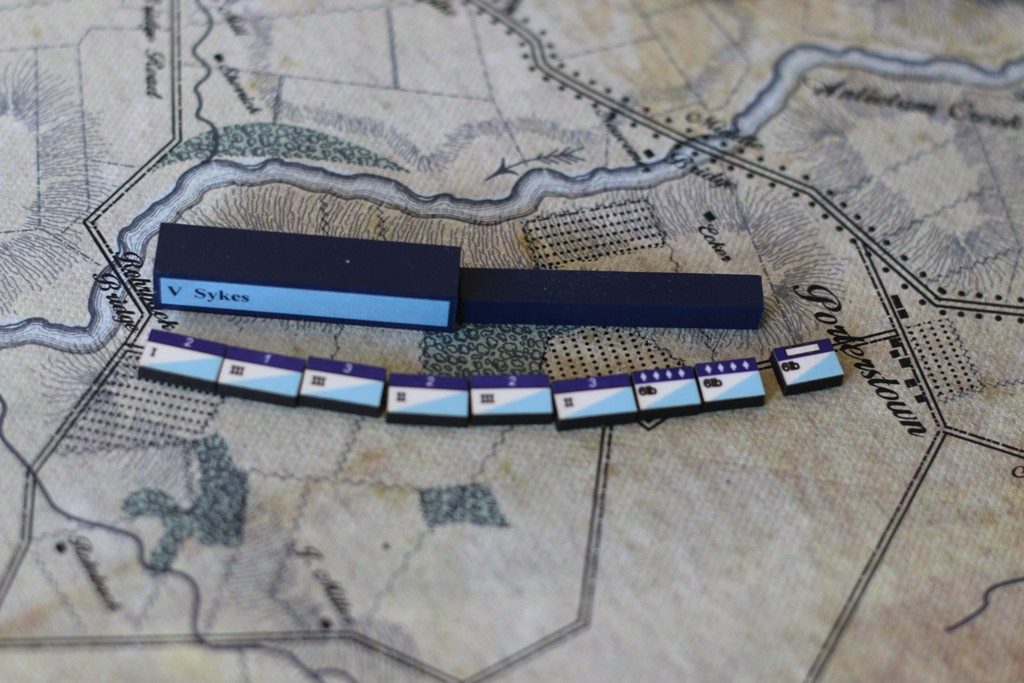
Another fascinating thing about the Kriegsspiel blocks is how they accommodate road column marches. 
img_8718

This is Sykes’ Division all strung out along the road.  I have a couple of artillery batteries tagging along also.  These cover about the same ground as a HQ and a few support pieces.  As you can see, it is very close to the Pub Battles block with a trailing road column piece. 

Another interesting thing you can do with the Kriegsspiel blocks is:  Line Extension.  In a pinch, you could spread out to cover more ground.  It is going to be a fragile line though.   


So far, everything appears to be sync-ing up.  You could easily use Kriegsspiel blocks to play a Pub Battles game.  This could give you more detail and precision.  There is one key difference:  map scale. 

The map scale is off by about 2:1.  So the official Kriegsspiel map is ‘zoomed in’ nearly twice as much compared to a Pub Battles map. 


Strange. How could that be?  Everything was matching up perfectly.  I’ve been checking historical maps.  The Pub Battles scale does match actual troop deployments for the real battles.  Does that mean Kriegsspiel is wrong?

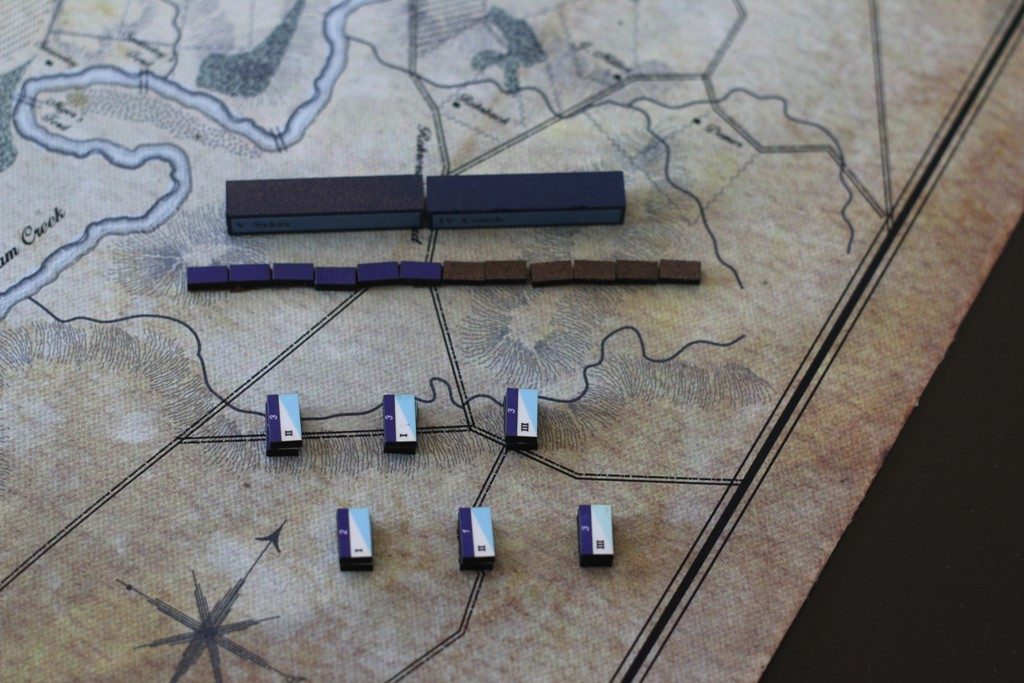
No.  I think Kriegsspiel has it right.  They are just looking at a smaller scale.  So our Division at Sharpsburg does fit in this space.  Note how it is all stacked up in a concentrated line.  In Kriegsspiel, it would actually be spread out more with space between the blocks.  This is a ‘Division’ setup in Kriegsspiel scale:
img_8726

First you would have your skirmish line out front.  The ‘Regiments’ are in attack column 300 paces behind.  They are not all stacked up together.  They are spread out with about 200 paces space between them.  Three other Regiments follow on behind but staggered.

Remember, we are ‘zoomed in’ now about 2:1.  So I’ve put 2 Pub Battles blocks to compare.  Sure enough, this formation is about the width of 2 Pub Battles blocks.

So basically, at Pub Battles scale, we have zoomed out so we can fit the entire battle on a reasonably sized map.  We fit the same troops in half the space by getting rid of all this extra space in formations.  The down side is that you lose the detail of skirmishers and various formation options.


Could you use Pub Battles maps to play Kriegsspiel on?  Absolutely.  They are ideal if you want to fight out an entire battle at once.  You would just need to remember that your distances are 2:1.

Here is another question:  Could you use Kriegsspiel blocks to play Pub Battles with?  Yes!  This can easily add a lot more detail and precision to the game.  Just keep in mind that this will also add time to the game as well.   
 

Hitler’s War- Game Review


hitlers_war-map

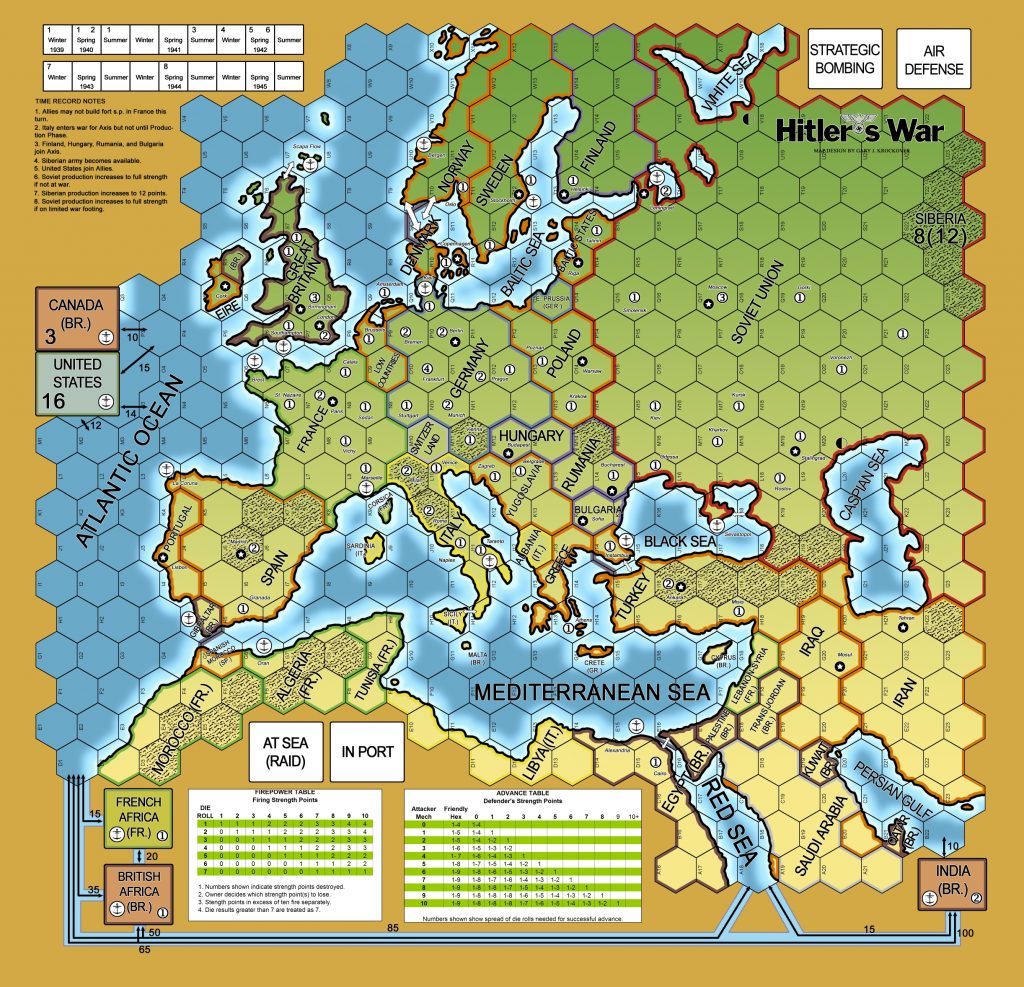
Hitler’s War is an old strategic wargame on WWII.  What is it like?  Is it any good?  Though I am almost embarrassed to admit it, this is actually one of my favorite games.  Serious wargamers (WiF, A3R, AETO) scoff at it.  Axis & Allies players would be disappointed in no minis.  What could I possibly see in this game?

Well, compared to Axis and Allies,  it doesn’t have the cute minis but it does a much better job in recreating the war:  economics, bombing, subs, Africa, Minors, you can start in 39.  The rules used to be  longer but Axis & Allies rules keep growing.  These days, Hitler’s War rules might even be shorter.  Hitler’s War used to take a little longer to play too but again the play time for Axis & Allies has grown.  I’d almost bet Hitler’s War could be played faster now.    

Hitler’s War does have some quirky things in how your armored spearheads work.  It is abstracted but then again, look at Third Reich.  Hitler’s War isn’t THAT whacky and gamey looking.

WiF and ETO are hard to beat for realism.  They are wonderful games.  The question is:  Do you have time to play them?  Do you have space to set them up?  I love those big, monster games but Hitler’s War is a game you can actually fit into your life.      


You can pretty much play through the entire war in a good day.  Try that with WiF or AETO! 

Yes, much of the detail is gone but in many ways I like this better. This allows you to focus on the truly strategic issues.  What is your production compared to the enemy?  What should you produce?  What countries do you attack?  When and why?  These big level issues are what really determine the war’s outcome anyways.  All the rest is just matter of grinding out the results isn’t it?

There is some detail. You can produce infantry, armor, air, bombers, navies, subs and ASW.  You can even invest in technology.  There are partisans and great leaders like Patton and Rommel.  You can direct the flow of the war by controlling how much you spend on these weapon systems.  Hitler’s War gives you the feel of WWII without bogging you down in tons of rules. 

Hitler’s War is a great example of how less it more. Removing all the minutiae allows players to focus on the big trends. Who should we invade first?  Poland, France then Russia?  Or Poland, Russia then France?  How about France, Poland, then Russia?  Guess what?  In Hitler’s War, you could test out all 3 of these plans on a Saturday!

In many ways this reminds me of Pub Battles. One of our play testers commented that Pub Battles is the game he has played the most this year.  Why?  It is exciting and has great re-playability but one of the biggest things going for it is speed.  It plays fast.  He just doesn’t have the time it takes to play a regular wargame these days.  He can always fly through a battle of Brandywine in a spare hour.  How many other games can you do that with?  Time and again, he finds himself pulling out Brandywine because it is fun and convenient.

Maybe Hitler’s War was onto something. Should we do a WWII Pub Battles?  Do you still like and play Hitler’s War?  What do you like about?  Hate about it? 

Tradable Bond Market?

The economy in Supremacy is remarkably realistic. Especially when compared to most other grand strategy games like Risk or Axis & Allies.  I got a very interesting email the other day about a (real life) banker’s reaction to Supremacy.  He was very excited about most of the things he saw.  He did express some concerns about how the Bonds and Loans work. 

This got me thinking….   Is there a way to make the Bonds and Loans tradable on the Market?  Ideally, you shouldn’t be able to take out loans, unless you can first find somebody willing to buy the bonds to back them.  Your payments should go directly to the Bond holding players. 

Another consideration is the rate of interest. With the Loan track, the interest starts out very low.  The deeper in debt you go, the more the interest rises. 

You have to be careful adding rules. Adding tons of complex rules to a game is easy.  How could we incorporate some of these forces into the game in a simple and sleek way that is consistent with the rest of the game design?  Any ideas out there?  Comment below or send me an email. 

Ever wonder what Kriegsspiel Dice looked like?

kriegsspiel

Most wargamers today know that the ‘first’ wargame was Kriegsspiel. It was created by Von Reisswitz as a training tool for the Prussian Army in 1812-ish.  Kriegsspiel is mostly known for its double blind, team play via Umpires.  True but have you ever wondered how they resolved combat?  Did they use CRTs?  No.  They used Kriegsspiel Dice!


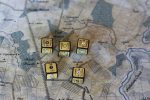
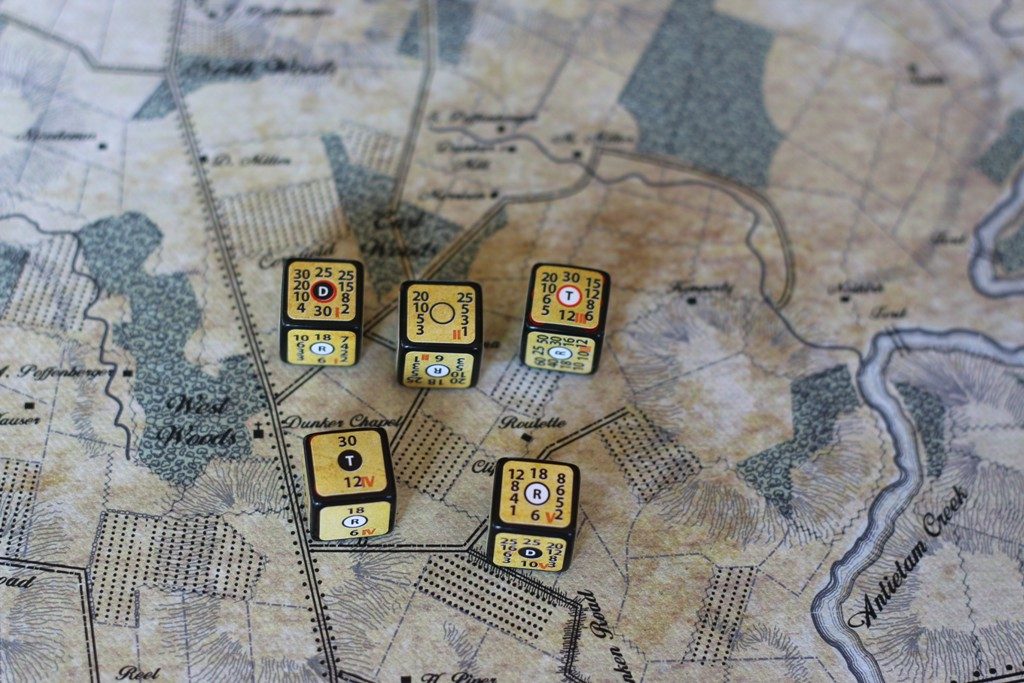
What?! How did that work?  What did they look like?  This is a fascinating piece of wargame history.  They looked like this:

kriegsspiel-dice


Fascinating  but how do you use them?  Essentially, the CRT is on the dice.  Here is a brief run down on the basics:

Each die represents a different combat Odds Ratio, ie. Die I is 1:1, Die II is 3:2, Die III is 2:1 etc. 

The left column of numbers are the casualties an infantry piece inflicts when firing.  They go from close range at the top to long range at the bottom.

The right column of numbers is the same except for skirmishers.

The center column is used for close combat / assaults.  The top number is losses for the attacker, the bottom for the defender.  The letter in the center of the circle denotes result to the unit for assaults:  R-repulsed, D-Defeated, T-Totally Defeated.  Black is a result on the defender.  White on the attacker. 

The big dots in the center are also used for artillery bombardments.  A red circle around the dot means the bombardment starts a fire if hitting buildings.  

Those are the basics.  It is a really detailed and technical combat system and it is based on the REAL combat experience of officers that served on the field in 1812.  You can debate theory, rates of fire and ranges all day long but this is what actually happened in the field with real men in battle.


So how do they play? We did an experiment to find out.  I was very apprehensive.  First I was concerned about all the little numbers.  How are you going to fit all of those on 1 die?  Is the die going to have to be super huge?  Even if you can, will it be too confusing?  How are you even going to be able to read all those tiny numbers and find the one you need?  Sounds like too much trouble.  I’ll just stick with the tables.  I’ve used those all my life.  What’s the big deal?  You just roll and look it up.  I expected that this would be a failed experiment.

Wow, was I wrong. We were completely surprised.  The numbers all easily fit on a standard size die.  With proper formatting and colors, they were easy to see and read.  The exact number you are looking for is easy to spot.  Once you know what the columns are for, it is easy to pick out the exact number for your range.  Your eye just snaps right to it automatically.  Far easier than I would have ever expected. 

The next thing we noticed was how much easier it made playing the game. This is hard to describe.  Here is an analogy:   Have you ever driven a stick shift in heavy, stop-n-go, rush hour traffic?  It wears on you.  Sure shifting is easy.  You can do it but when you keep having to shift up and down constantly for an hour straight, it wears you down.  Especially compared to driving an automatic. 

The Kriegsspiel Dice speed things up.  They free up my aging and feeble brain to focus on other things. It is pretty incredible when you think about it.  There is about 20 tables worth of data all packed onto those tiny, little dice.  No fuss, no muss.  It felt very liberating.


Looking back, I wonder why this old piece of technology was dropped. It is an amazingly powerful and efficient tool.  I wish all my modern games used dice like this. 


Own a Piece of History

From the Game That Started it All


You can get your own set of real Prussian Kriegsspiel Dice here.

You can still get the original Kriegsspiel game, along with a ton of amazingly detailed maps from:

Too Fat Lardies.

You can get scaled metal Kriegsspiel blocks here.

or

Wooden pieces with measuring apparatus here.